
 Image 1 of 3
 Image 2 of 3
 Image 3 of 3
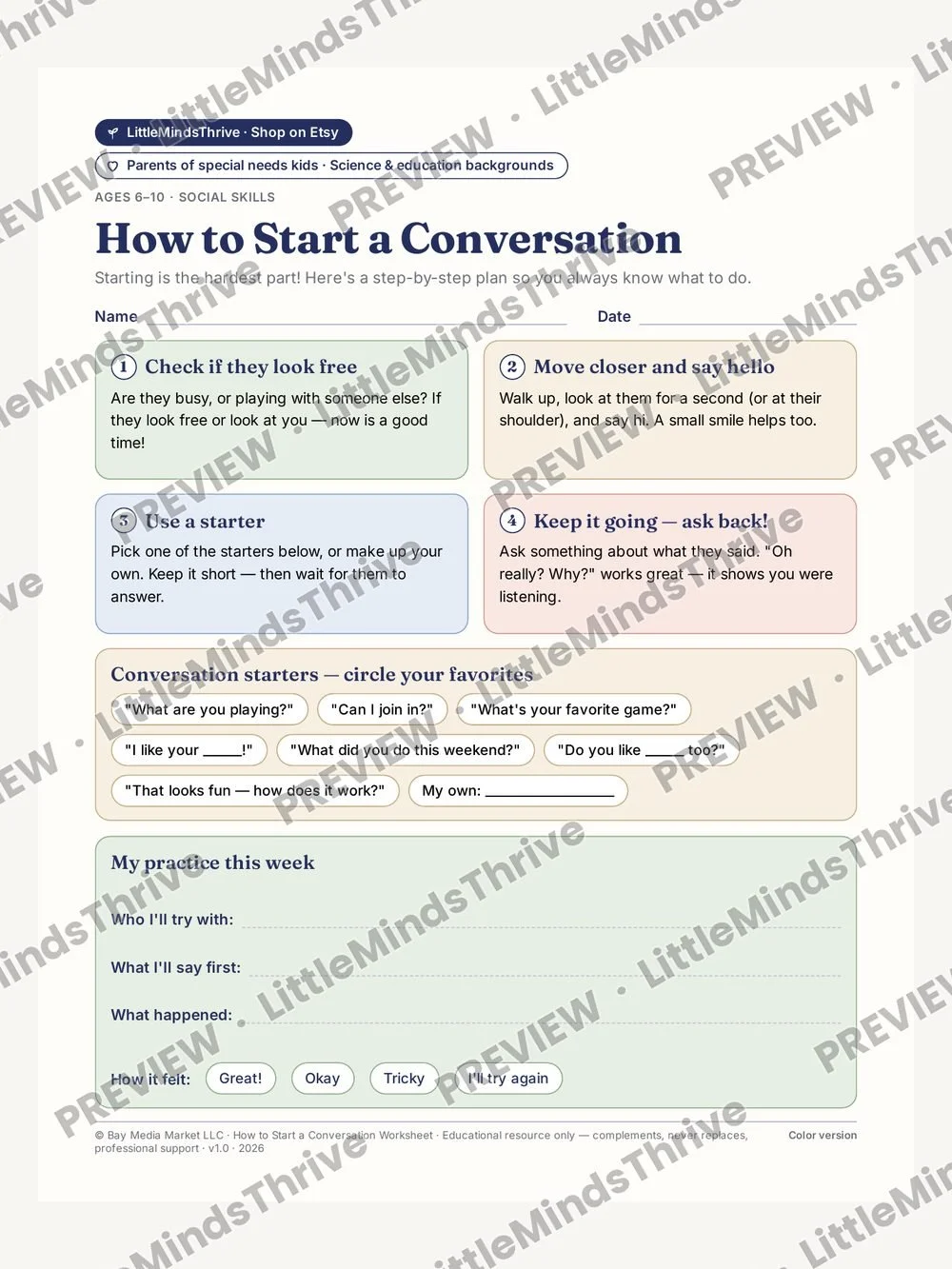
This worksheet breaks starting a conversation into four clear steps, gives your child ready-made starters to choose from, and includes a practice box to plan — and celebrate — a real try.
Created by special needs parents — one with a background in scientific research — and grounded in peer-reviewed research.
4-step visual guide: check if they're free, say hello, use a starter, ask back
8 conversation starters to circle (plus room for their own)
"My practice this week" box with a how-it-felt check-in
Parents supporting a child at home
Teachers and school counselors
OTs, speech therapists and BCBA/behavior teams
Children with ADHD, autism, anxiety or big feelings — and any child who needs a little more structure
Color version — soft, calm colors
Printer-friendly version — white background, outlines only; uses about half the ink and prints clearly in black and white
A one-page guide for grown-ups: how to use it, why it helps, and research references
Instant PDF download · US Letter (8.5 × 11 in); also prints on A4 with "Fit to page"
Ages 6–10
3 pages: color worksheet, printer-friendly worksheet, grown-up guide
Tip: slip it into a sheet protector and use a dry-erase marker for daily reuse
Taken from our full Social Skills Builder Bundle — see all bundles on the Therapy Resources page
Download link active for 24 hours — save immediately. Expired? Check your email for a new link.
Educational resource only — complements, never replaces, support from your child's doctor, therapist or teacher
© Bay Media Market LLC — licensed for personal, single-classroom or single-practitioner use only
This worksheet breaks starting a conversation into four clear steps, gives your child ready-made starters to choose from, and includes a practice box to plan — and celebrate — a real try.
Created by special needs parents — one with a background in scientific research — and grounded in peer-reviewed research.
4-step visual guide: check if they're free, say hello, use a starter, ask back
8 conversation starters to circle (plus room for their own)
"My practice this week" box with a how-it-felt check-in
Parents supporting a child at home
Teachers and school counselors
OTs, speech therapists and BCBA/behavior teams
Children with ADHD, autism, anxiety or big feelings — and any child who needs a little more structure
Color version — soft, calm colors
Printer-friendly version — white background, outlines only; uses about half the ink and prints clearly in black and white
A one-page guide for grown-ups: how to use it, why it helps, and research references
Instant PDF download · US Letter (8.5 × 11 in); also prints on A4 with "Fit to page"
Ages 6–10
3 pages: color worksheet, printer-friendly worksheet, grown-up guide
Tip: slip it into a sheet protector and use a dry-erase marker for daily reuse
Taken from our full Social Skills Builder Bundle — see all bundles on the Therapy Resources page
Download link active for 24 hours — save immediately. Expired? Check your email for a new link.
Educational resource only — complements, never replaces, support from your child's doctor, therapist or teacher
© Bay Media Market LLC — licensed for personal, single-classroom or single-practitioner use only